Three Materials, Three Philosophies
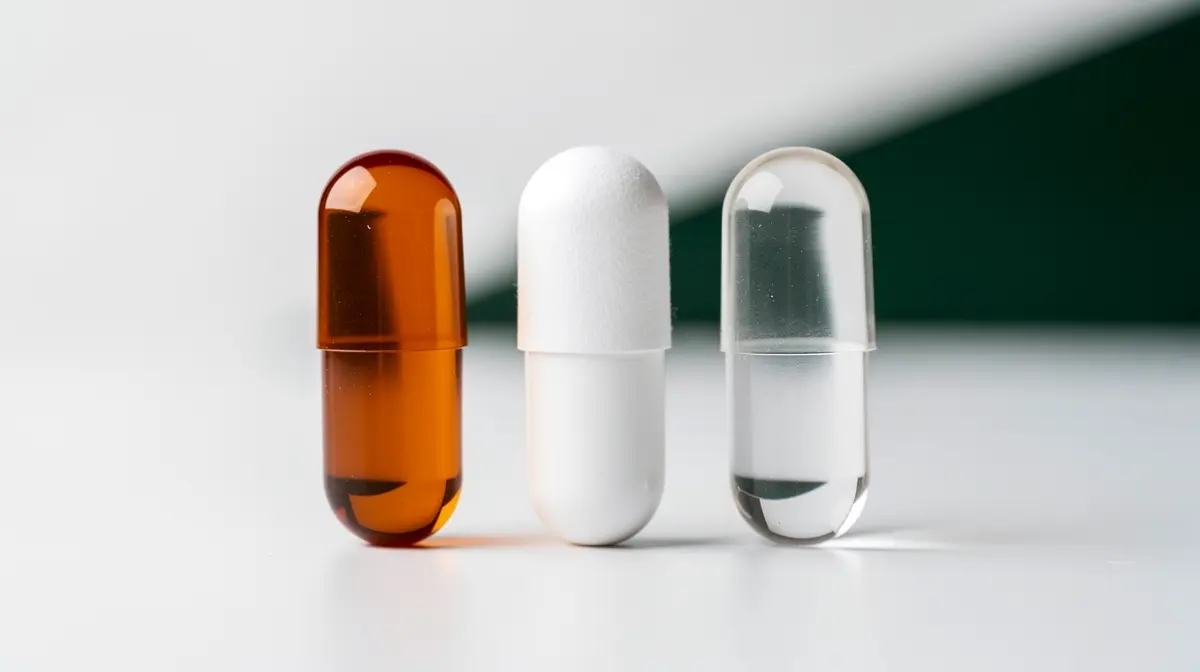
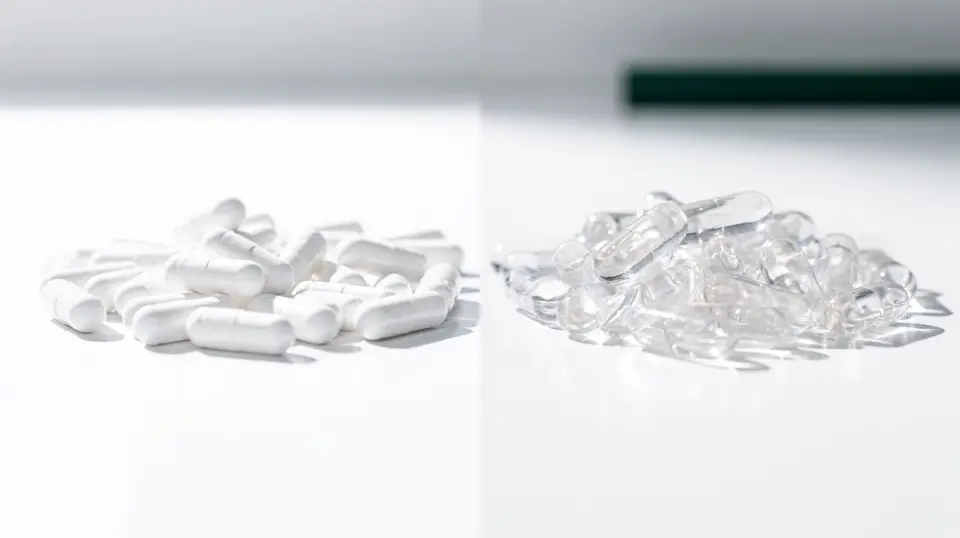
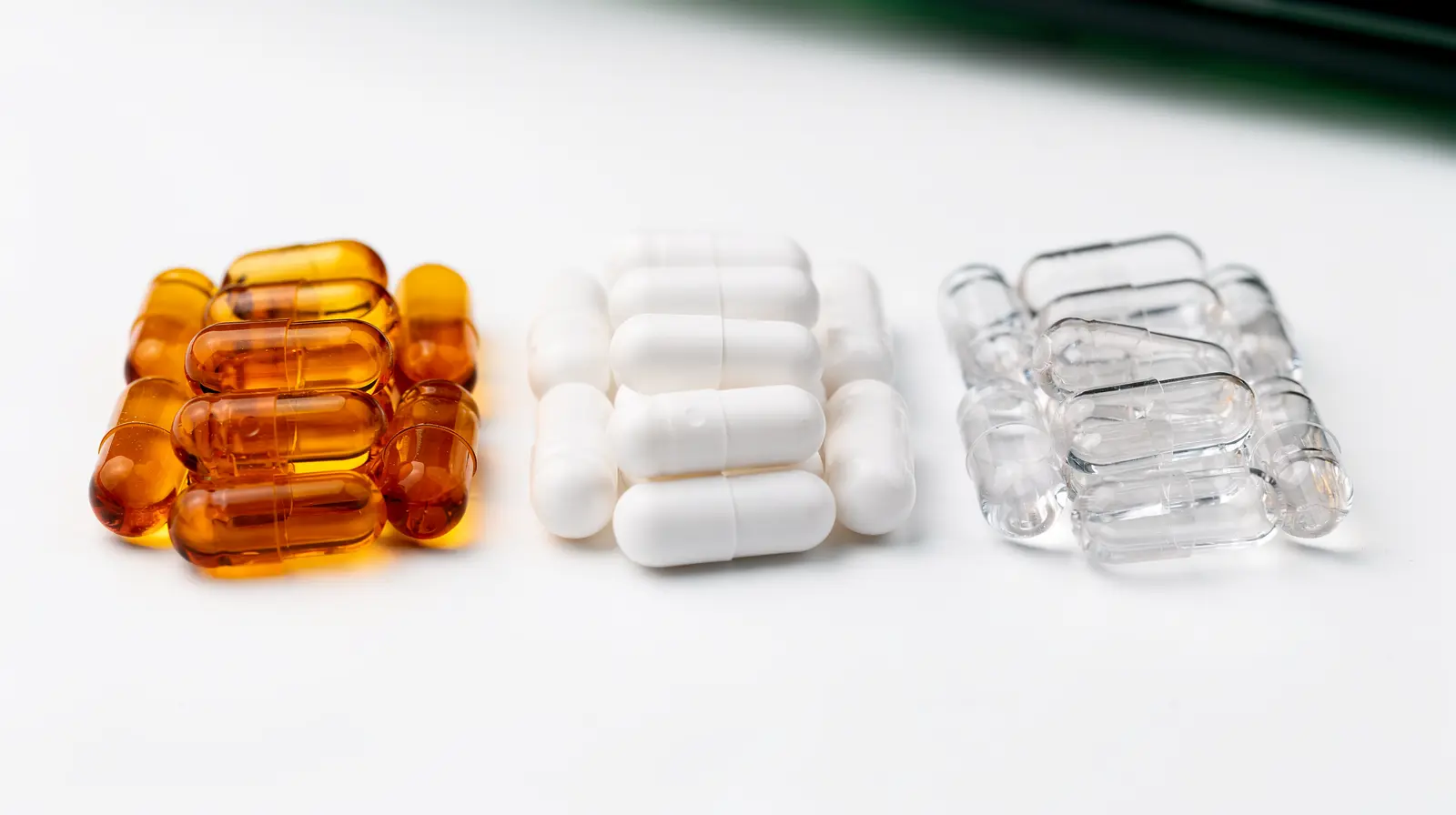
The global capsule market is dominated by three shell materials, each with distinct strengths. Gelatine — derived from bovine or porcine collagen — has been the industry standard for over a century. HPMC (hydroxypropyl methylcellulose) emerged in the late 1990s as a plant-based alternative. Pullulan, a polysaccharide produced by the fungus Aureobasidium pullulans, is the newest entrant, offering a unique combination of natural origin and superior barrier properties.
Choosing between these materials is not simply a matter of preference. Each has measurable differences in moisture content, oxygen permeability, dissolution speed, and cost that directly affect formulation stability, consumer acceptance, and profitability.
Gelatine Capsules
Gelatine remains the most widely used capsule material. It offers excellent clarity, fast dissolution (5-10 minutes), and the lowest cost per unit. Gelatine capsules are available in bovine and fish variants, with bovine being the most common.
Advantages: lowest cost, fastest dissolution, excellent mechanical strength, well-established regulatory acceptance worldwide.
Limitations: animal origin (not suitable for vegan/vegetarian markets), susceptible to cross-linking with aldehyde-containing excipients, higher moisture content (13-15%) problematic for hygroscopic fills, potential BSE/TSE concerns with bovine sources.
HPMC Capsules
HPMC capsules are the standard plant-based alternative, made from cellulose-derived hydroxypropyl methylcellulose. They offer low moisture content (up to 7%) and chemical inertness, making them technically superior for many formulations.
Advantages: plant-based, vegan, halal and kosher, low moisture (ideal for hygroscopic ingredients), no cross-linking risk, broad pH stability.
Limitations: slower dissolution than gelatine (15-20 minutes), 20-30% higher cost, requires gelling agents (gellan gum or carrageenan) which some clean-label formulations prefer to avoid.
Pullulan Capsules
Pullulan capsules represent the newest innovation in capsule technology. Produced by natural fermentation, pullulan offers a unique oxygen barrier significantly better than HPMC and gelatine. This makes pullulan the material of choice for oxygen-sensitive active ingredients.
Advantages: superior oxygen barrier, 100% natural (no synthetic processing aids), TiO2-free, excellent clarity rivalling gelatine.
Limitations: highest cost of the three materials, limited supplier base, slightly slower dissolution than gelatine.
Comparison Table
| Property | Gelatine | HPMC | Pullulan |
|---|---|---|---|
| Origin | Animal (bovine/fish) | Plant (cellulose) | Natural (fermentation) |
| Moisture content | 13-15% | ≤7% | 10-15% |
| Dissolution (SGF) | 5-10 min | 15-20 min | 10-15 min |
| Oxygen barrier | Low | Moderate | Excellent (8-9x HPMC) |
| Vegan | No | Yes | Yes |
| Halal/Kosher | Yes (bovine, certified) | Yes | Yes |
| Cross-linking risk | Yes | No | No |
| Relative cost | 1x (baseline) | 1,2-1,3x | 1,6-2x |
| Best for | Cost-sensitive, fast-release | Hygroscopic, vegan | Oxygen-sensitive, clean-label |
How to Choose
Start with your formulation requirements. If your active ingredients are oxygen-sensitive (e.g. omega-3, CoQ10, certain probiotics), pullulan is the clear choice despite higher cost — the improved stability can extend shelf life and reduce overage costs.
If moisture sensitivity is your primary concern and cost matters, HPMC provides the best balance. For standard formulations where cost is the primary driver and there are no dietary restrictions, gelatine remains the most economical option.
Many companies maintain all three capsule types in their portfolio, selecting the optimal material for each product line based on formulation needs and target market positioning.
Frequently asked questions
Can I switch from gelatine to HPMC or pullulan without reformulating?
Which capsule material is best for probiotics?
Need capsules for your formulation?
View our range →