Overview of Capsule Manufacturing
Empty two-piece hard capsules — whether gelatine, HPMC, or pullulan — are manufactured using a process known as the dip-coating method. The fundamental principle has remained unchanged since the early 20th century: metal pin moulds are dipped into a solution of the capsule material, and the resulting film is dried, trimmed, and assembled into cap-and-body capsules.
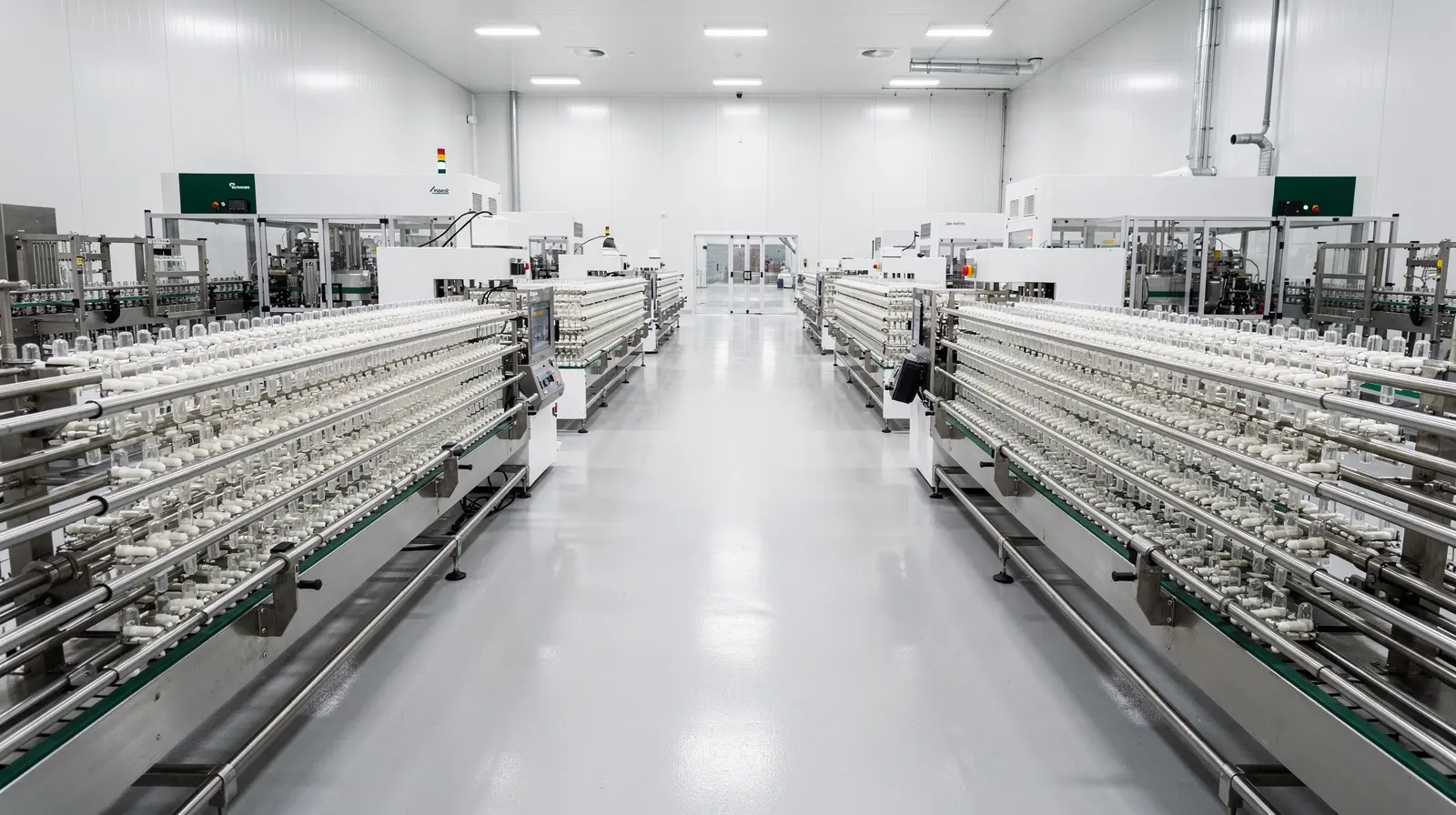
Modern manufacturing, however, has transformed this process into a highly automated, precision-controlled operation. A single production line can produce 1-2 million capsules per hour, with dimensional tolerances measured in micrometres.
Step 1: Raw Material Preparation
The process begins with preparing the capsule solution. For gelatine capsules, pharmaceutical-grade gelatine (bovine, porcine, or fish) is dissolved in purified water at 60-70 degrees C to create a viscous solution. For HPMC capsules, hydroxypropyl methylcellulose is dissolved in hot water and combined with a gelling agent (typically gellan gum) to enable the dipping process.
The solution is carefully controlled for viscosity, temperature, and concentration. Colourants, opacifiers, or other additives are mixed in at this stage. The solution is then de-aerated under vacuum to remove any air bubbles that could cause defects in the finished capsules.
Step 2: Dipping
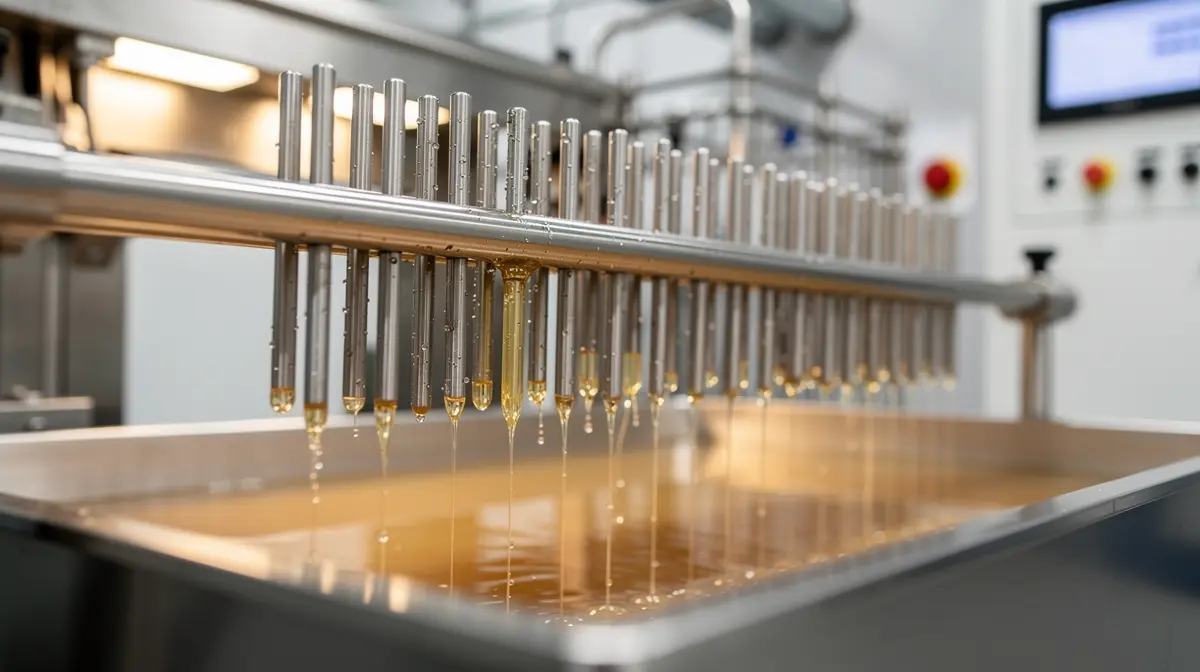
Stainless steel pin bars, each holding dozens of precision-machined pins, are dipped into the capsule solution. The pins are shaped to form either the capsule cap (shorter) or the capsule body (longer). The dipping speed, depth, and dwell time determine the wall thickness of the capsule, which typically ranges from 0,09 to 0,12 mm.
Temperature control during dipping is critical. For gelatine, the solution must be maintained at exactly the right temperature to ensure consistent coating. For HPMC, the gellan gum gelling system requires precise thermal management to achieve proper film formation.
Step 3: Spinning and Drying
After dipping, the pin bars are rotated slowly to distribute the coating evenly and prevent dripping. The coated pins then pass through a series of drying kilns where warm, humidity-controlled air removes moisture. The drying process takes 30-45 minutes for gelatine and longer for HPMC capsules.
Proper drying is essential for achieving the correct moisture content (~13-15% for gelatine, up to 7% for HPMC). Under-drying leads to soft, sticky capsules; over-drying causes brittle shells that crack during filling.
Step 4: Stripping and Trimming
Once dried, the capsule shells are stripped from the pins using mechanical grippers. The shells are then trimmed to precise lengths using rotary cutting machines. This step determines the final capsule dimensions and ensures consistent cap-body fit.
The trimmed capsules are sorted into caps and bodies, then pre-closed (telescoped together) to create the familiar two-piece capsule. The pre-closing force is carefully calibrated to allow easy separation during filling while preventing accidental opening during shipping.
Step 5: Quality Control
Every batch undergoes rigorous quality testing. Dimensional checks verify that capsule length, diameter, and wall thickness meet specifications. Visual inspection (increasingly automated using camera systems) detects cosmetic defects such as dents, holes, splits, or discolouration.
Physical tests include: disintegration time (how quickly the capsule dissolves), moisture content, breaking force, and locking length. Chemical analysis confirms the absence of heavy metals, microbial contamination, and residual solvents. Each lot is released with a Certificate of Analysis (CoA).
Quality Standards
Pharmaceutical-grade capsules are manufactured in compliance with current Good Manufacturing Practice (cGMP) and must meet the monograph requirements of the European Pharmacopoeia (EP) or the United States Pharmacopeia (USP). These standards specify limits for physical dimensions, dissolution, moisture, microbial purity, and heavy metals.
Frequently asked questions
How many capsules can a single production line produce?
What determines capsule colour?
Need capsules for your formulation?
View our range →