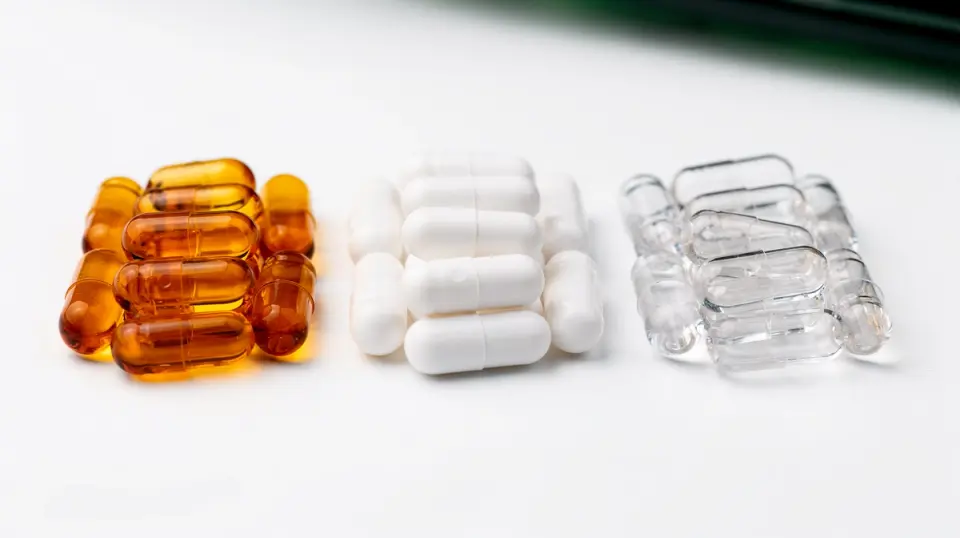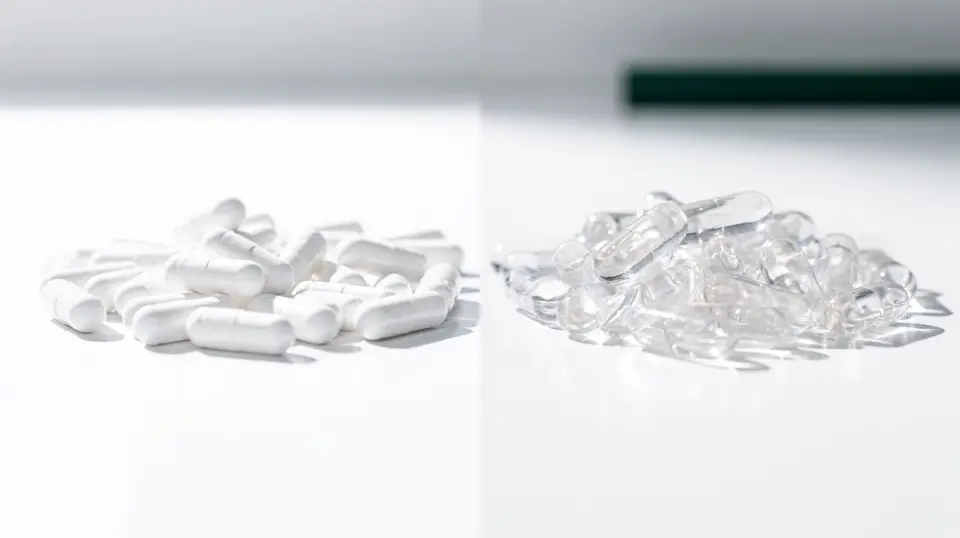
What is HPMC?
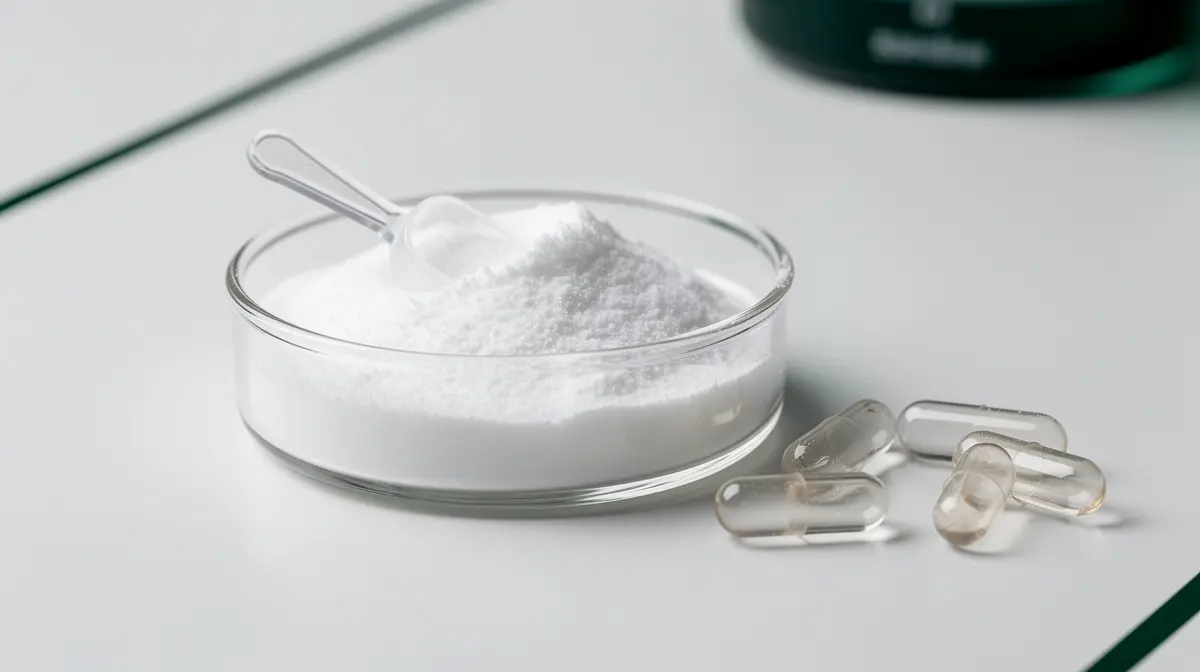
HPMC stands for hydroxypropyl methylcellulose, a semi-synthetic polymer derived from cellulose — the structural component of plant cell walls. In capsule manufacturing, HPMC serves as a plant-based alternative to traditional animal gelatine. The material is produced by treating cellulose with propylene oxide and methyl chloride under controlled conditions, creating a thermogelling polymer with excellent film-forming properties.
HPMC capsules were first commercialised in the late 1990s and have since become the standard choice for vegetarian, vegan, halal, and kosher formulations. Today, HPMC is one of the most widely used plant-based capsule materials, with steadily growing demand.
Key Properties of HPMC Capsules
HPMC capsules offer several distinct properties that make them suitable for a wide range of formulations:
Low moisture content (up to 7%) — HPMC capsules contain significantly less moisture than gelatine capsules (~13-15%). This makes them ideal for hygroscopic (moisture-absorbing) ingredients such as certain herbal extracts, probiotics, and mineral salts. The low moisture environment helps maintain ingredient stability and potency throughout the product shelf life.
Chemical inertness — HPMC is chemically inert, meaning it does not react with most active pharmaceutical ingredients (APIs). Unlike gelatine, which can undergo cross-linking with aldehydes present in certain excipients, HPMC maintains its dissolution characteristics over time.
No animal-derived materials — The plant-based origin of HPMC makes these capsules suitable for consumers with dietary restrictions, religious requirements, or ethical preferences. The HPMC material itself is vegan, halal and kosher; formal vegan certification is a separate document, available for selected capsule lines.
Wide pH stability — HPMC capsules dissolve consistently across a wide pH range (1,2 to 7,4), making them suitable for both immediate-release and delayed-release formulations.
HPMC vs Gelatine: How Do They Compare?
The choice between HPMC and gelatine capsules depends on your specific formulation needs. Gelatine capsules offer faster dissolution (typically 5-10 minutes vs 15-20 minutes for HPMC) and are generally less expensive. However, gelatine is susceptible to cross-linking with certain excipients containing aldehydes, which can slow dissolution over time.
HPMC capsules are the better choice when: your formulation contains hygroscopic ingredients, you need halal/kosher/vegan certification, your product targets health-conscious consumers who prefer plant-based products, or your formulation includes ingredients that may cross-link with gelatine.
Gelatine capsules remain preferred when: fast dissolution is critical, cost is a primary concern, and the formulation contains no cross-linking agents. Many pharmaceutical companies maintain both options in their product lines.
Common Applications
HPMC capsules are widely used across the pharmaceutical, nutraceutical, and dietary supplement industries. Common applications include:
Probiotics — The low moisture content of HPMC capsules is critical for maintaining viability of probiotic strains. Many clinical-grade probiotic products exclusively use HPMC capsules.
Herbal extracts — Plant-based formulations naturally pair with plant-based capsules, and many herbal extracts are hygroscopic, making HPMC the technical choice as well.
Vegetarian, halal & kosher markets — HPMC capsules are widely chosen for supplement lines targeting markets with significant vegetarian, halal or kosher demand.
Nutraceuticals — Vitamins, minerals, and specialty supplements frequently use HPMC capsules to support clean-label and plant-based marketing claims.
How to Choose the Right HPMC Capsule
When selecting HPMC capsules, consider these factors:
Size — Capsule sizes range from 000 (largest, ~1,37 ml) to 5 (smallest, ~0,13 ml). Size 0 and 00 are the most common for dietary supplements, while sizes 1-3 are typical for pharmaceutical applications. Match the capsule size to your fill volume and target dose.
Colour — Transparent is standard; coloured options are available on request for brand differentiation and light protection.
Certification — While HPMC is inherently plant-based, ensure your supplier can document EP/USP compliance and provide halal and kosher certificates as required by your target market.
Supplier quality — Look for capsule suppliers who manufacture to GMP standards and can provide Certificates of Analysis (CoA), stability data, and Technical Data Sheets (TDS).
Frequently asked questions
Are HPMC capsules suitable for liquid fills?
Do HPMC capsules have any taste or odour?
What is the shelf life of HPMC capsules?
Need capsules for your formulation?
View our range →