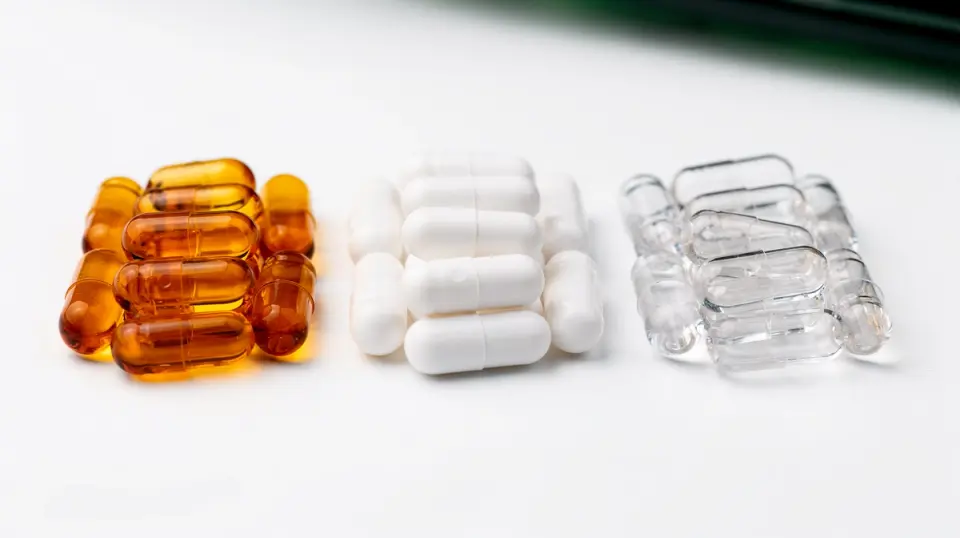
What Are Acid-Resistant Capsules?
Acid-resistant capsules (also known as delayed-release or enteric capsules) are designed to pass through the acidic environment of the stomach intact and dissolve in the more alkaline conditions of the small intestine. This targeted delivery protects acid-sensitive ingredients from gastric degradation and ensures they reach the absorption site where they are most effective.
Unlike traditional enteric coatings, which are applied as a secondary layer to standard capsules, modern acid-resistant capsules achieve this protection through the capsule shell material itself — typically a modified HPMC formulation that resists dissolution at low pH.
How Acid-Resistant Capsules Work
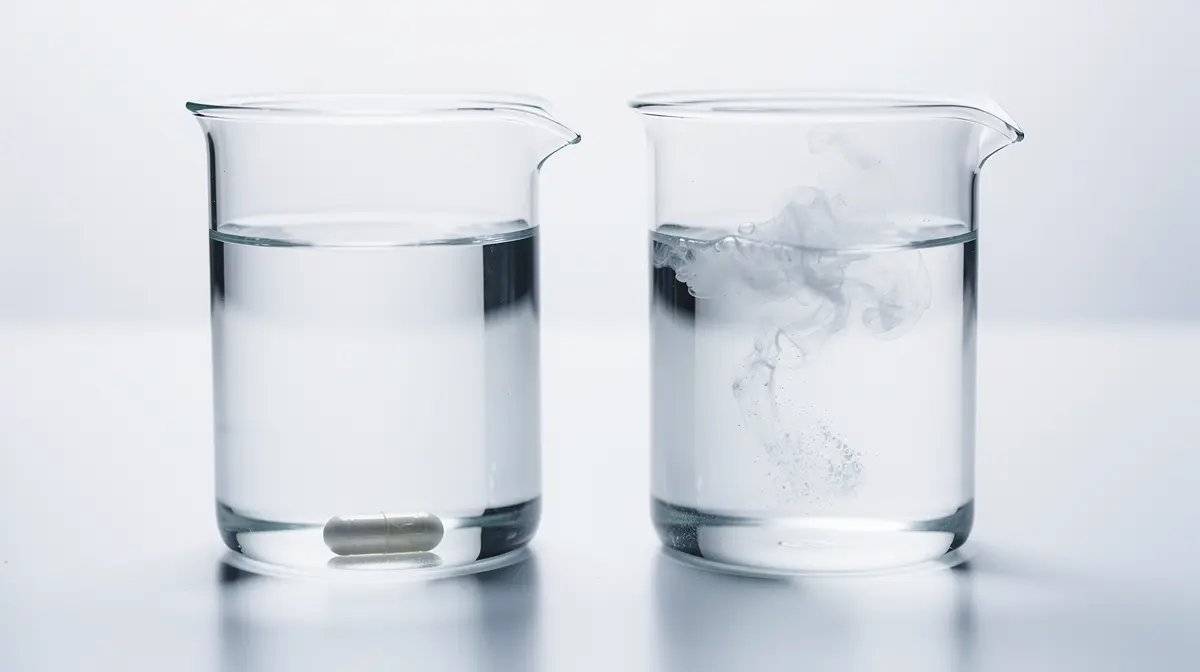
The mechanism relies on pH-dependent solubility. Standard capsules dissolve in gastric fluid (pH 1,2-3,0) within 5-20 minutes. Acid-resistant capsules are formulated to remain intact at pH below 5,0 and dissolve only when pH rises above 5,5-6,0, which corresponds to the conditions in the duodenum and small intestine.
The delayed-release behavior is achieved through the capsule shell composition. Modified HPMC polymers with specific functional groups create a matrix that is stable in acidic conditions but swells and dissolves in neutral or slightly alkaline environments. The transition is typically complete within 30-60 minutes after the capsule enters the intestine.
When to Use Acid-Resistant Capsules
Probiotics — Many probiotic strains (particularly Lactobacillus and Bifidobacterium species) are highly sensitive to stomach acid. Without acid protection, a significant proportion of probiotic organisms can be destroyed during gastric transit. Acid-resistant capsules significantly improve the number of viable organisms reaching the intestine.
Digestive enzymes — Pancreatic enzymes and certain plant-derived enzymes (such as bromelain and serrapeptase) can be denatured by stomach acid. Delayed release ensures enzymatic activity is preserved until the enzymes reach the small intestine.
Herbal extracts — Some herbal compounds, particularly those containing volatile oils or acid-labile phytochemicals, benefit from gastric protection. Examples include peppermint oil capsules, which are formulated for release in the intestine.
Acid-sensitive actives — Certain active ingredients require protection from gastric acid to maintain their integrity. Acid-resistant capsules provide a simpler alternative to enteric coatings.
Acid-Resistant Capsules vs Enteric Coatings
Traditional enteric coatings involve applying a pH-sensitive polymer (such as HPMC-AS, methacrylate copolymers, or shellac) to a standard capsule or tablet. This adds a manufacturing step, requires specialised coating equipment, and introduces additional excipients.
Acid-resistant capsules eliminate the coating step entirely — the capsule shell itself provides the acid protection. This simplifies manufacturing, reduces production costs, and results in a cleaner ingredient list. The capsules can be filled using standard capsule-filling equipment with no modifications.
Performance is comparable. In-vitro dissolution studies show that acid-resistant HPMC capsules resist gastric dissolution for 2+ hours at pH 1,2, meeting the pharmacopoeia requirements for delayed-release dosage forms.
Formulation Tips
When formulating with acid-resistant capsules, keep these points in mind:
Fill compatibility — Acid-resistant capsules work best with dry powder and granule fills. For liquid or semi-solid fills, confirm compatibility with the capsule shell material.
Stability — The modified HPMC shell may have slightly different moisture characteristics than standard HPMC. Conduct stability testing under ICH conditions to verify shelf life.
Labelling — Products using acid-resistant capsules can make "delayed release" or "intestinal delivery" claims, which can be a marketing advantage for probiotic and enzyme products.
Frequently asked questions
How long do acid-resistant capsules take to dissolve?
Are acid-resistant capsules vegan?
Can I use acid-resistant capsules with any filling machine?
Need capsules for your formulation?
View our range →